UML 2 Frame Style Guidelines

Scott W. Ambler + Associates
 
   Home  |  AMDD  |  Best Practices  |  Architecture  |  Requirements  |  Analysis  |  Design  |  Documentation  |  Models  |  Modeling Style  |  Contact Us  |  Announcements  |  FAQ
Elements of UML 2.0 Style A frame in the UML encapsulates a collection of collaborating instances or refers to another representation of such.  Frames are depicted as rectangles with a notched descriptor box in the top left corner.  Frames come in two flavors, a diagram frame such as Batch Transcript Printing and combined fragment frame such as the loop frame, both in Figure 1.  Diagram frames explicitly define the boundary of a diagram whereas combined fragment frames encompass portions of a diagram or provide references to other diagrams or method definitions.  


Figure 1. A frame encompassing a sequence diagram.

Figure 2. Modeling alternate courses of logic.
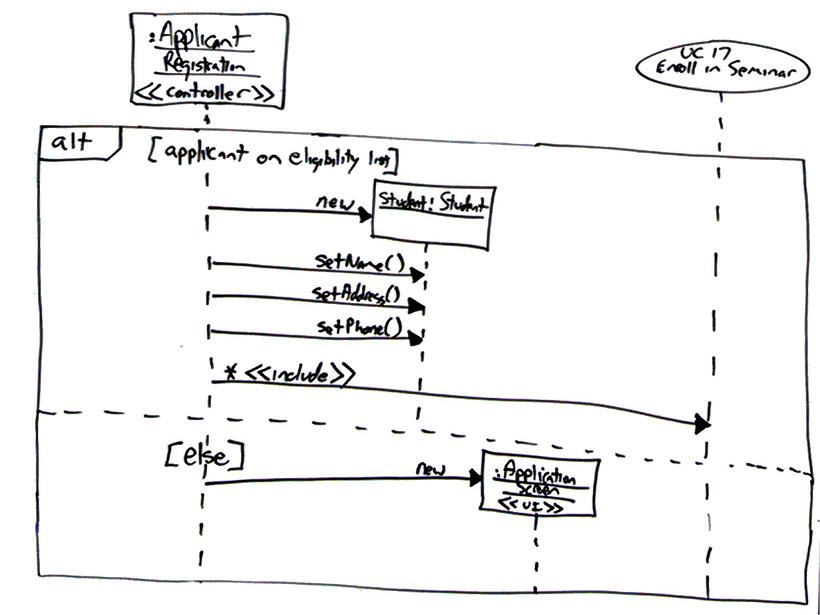
Figure 3. The internals of the seminar component.


  1. Avoid Diagram Frames.  The Batch Transcript Printing diagram frame of Figure 1 adds a significant amount of visual clutter in the process. 
  2. Use Interaction Occurrences Over Part Decompositions. There are two references to logic external to Figure 1: the TranscriptBatch object includes a reference to PrintRun and there is a combined fragment referencing the SharedServices.print() method.  The style of the first reference is called a part decomposition and the second an interaction occurrence. 
  3. Fully Specify Operation Names in References.
  4. Depict One Interface Per PortPorts are connection points between a classifier and its environment which, are depicted on the side of frames as small rectangles. 
  5. Depict One Port Per Realizing Class.  See also UML interface style guidelines.
  6. Deemphasize Frame Borders.  In Figure 1 you see that the frame border is lighter than the lines around it.
  7. Apply Standard Labels to DescriptorsTable 1 summarizes common labels for diagram frames and Table 2 the common labels for combined fragments.


Table 1. Diagram frame labels.
Label Usage
Component The frame depicts the internal design of a component.
Package The frame depicts the internal organization of a package, often using a UML class diagram or a UML use case diagram.
sd Indicates that the frame contains an interaction diagram, usually a UML sequence diagram although UML communication diagrams are also common options.
Use Case The frame depicts the logic of a use case, often as a UML activity diagram or a UML interaction overview diagram.


Table 2. Combined fragment labels.
Label Usage
alt Indicates several alternatives, only one of which will be taken, separated by dashed lines.  Used to model if and switch statements.  See the example in Figure 2.
assert Indicates that the fragment models an assertion.
criticalRegion Indicates that the fragment must be treated as atomic and cannot be interleaved with other event occurrences.  Often used within a par frame (Douglass 2004).
loop Models logic which will be potentially repeated several times.
opt Models optional logic depending on the run-time evaluation of a guard.
par Indicates several fragments of logic, separated by dashed lines, all of which will run in parallel.
ref References another diagram or a method definition.


Recommended Resources

Elements of UML 2.0 Style   The Elements of UML 2.0 Style describes a collection of standards, conventions, and guidelines for creating effective UML diagrams. They are based on sound, proven software engineering principles that lead to diagrams that are easier to understand and work with.  These conventions exist as a collection of simple, concise guidelines that if applied consistently, represent an important first step in increasing your productivity as a modeler.  This book is oriented towards intermediate to advanced UML modelers, although there are numerous examples throughout the book it would not be a good way to learn the UML (instead, consider The Object Primer).  The book is a brief 188 pages long and is conveniently pocket-sized so it's easy to carry around.
The Object Primer 3rd Edition: Agile Model Driven Development (AMDD) with UML 2   The Object Primer 3rd Edition: Agile Model Driven Development with UML 2 is an important reference book for agile modelers, describing how to develop 35 types of agile models including all 13 UML 2 diagrams.  Furthermore, this book describes the techniques of the Full Lifecycle Object Oriented Testing (FLOOT) methodology to give you the fundamental testing skills which you require to succeed at agile software development.  The book also shows how to move from your agile models to source code (Java examples are provided) as well as how to succeed at implementation techniques such as refactoring and test-driven development (TDD).  The Object Primer also includes a chapter overviewing the critical database development techniques (database refactoring, object/relational mapping, legacy analysis, and database access coding) from my award-winning Agile Database Techniques book.
Agile Modeling   Agile Modeling: Effective Practices for Extreme Programming and the Unified Process is the seminal book describing how agile software developers approach modeling and documentation.  It describes principles and practices which you can tailor into your existing software process, such as XP, the Rational Unified Process (RUP), or the Agile Unified Process (AUP), to streamline your modeling and documentation efforts.  Modeling and documentation are important aspects of any software project, including agile projects, and this book describes in detail how to elicit requirements, architect, and then design your system in an agile manner.


Let Us Help

We actively work with clients around the world to improve their information technology (IT) practices, typically in the role of mentor/coach, team lead, or trainer.  A full description of what we do, and how to contact us, can be found at Scott W. Ambler + Associates.


Agile Data (AD)  |  Agile Unified Process (AUP)  |  Enterprise Unified Process (EUP)  |  Disciplined Agile Delivery (DAD)  |  My Writings   |  IT Surveys  

Follow Scott W. Ambler on Twitter


Copyright © 2002-2012 Scott W. Ambler

This site owned by Ambysoft Inc.